
Empowers A SuperMINORITY
Denying a MAJORITY of Clark County voters their elected "voice" at the local level just isn't good governance. We deserve fair representation in all county decisions, including taxation.
Constrains Representative Democracy
Enables A Tyranny of the Minority
Proposed Amendment 25 implements a two-thirds Supermajority on councilmanic taxation decisions, thereby granting a SuperMINORITY veto power over the will of the majority.
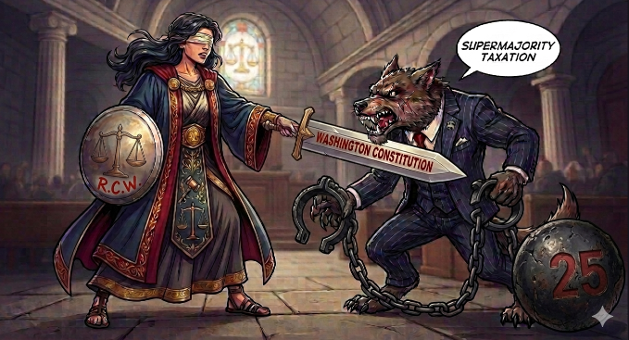
“The Supermajority Requirement unconstitutionally amends the constitution by imposing a two-thirds vote requirement for tax legislation. More importantly, the Supermajority Requirement substantially alters our system of government, thus enabling a tyranny of the minority.”
– Justice Susan Owens, League of Education Voters v. State of Washington, 176 Wash. 2d 808, 295 P.3d 743 (2013)
Entrenches An Extreme SuperMajority
Grants A Minority Veto Power
Proposed Amendment 25 denies the majority of Clark County voters their elected "voice" on taxation decision. We deserve fair representation and government that's responsive to our needs.

Enables Extreme SuperMajority Rule
In most democratic decisions, a Simple Majority rules. However, the Clark County Council already requires a 60% SuperMajority vote to approve all measures, including councilmanic taxes. While Proposed Amendment 25 claims to implement a two-thirds SuperMajority vote, that's mathematically impossible for a five-member council like ours. In reality, Amendment 25 imposes an extreme SuperMajority, requiring four of the five councilors–80%–reach "consensus" before enacting or increasing councilmanic taxes. This immoderate proposal would be the most restrictive of its kind in Washington State.

Promises Gridlock, Not Consensus
While Proposed Amendment 25 promises "broader consensus" on taxation decisions, conversely, it gives two County Councilors–a minority–the power to stop a councilmanic tax vote supported by the other three. This veto power has been called, "a tyranny of the minority" because it allows a small group of elected officials to block policies that are popular with most voters. When an extreme SuperMajority is in place, a minority faction can refuse to compromise, leading to political gridlock. One result: inaction on critical funding decisions, delaying a response in an emergency or fiscal crisis.

Denies Voters Fair Representation in Local Government
An extreme SuperMajority, like Proposed Amendment 25, is simply unfair. When a political minority can prevent a popular measure from being approved, it means that each opposing minority vote "counts" more than each supporting majority vote. And, if one person's vote "counts" more than another person's vote, elected officials can–and do–ignore the wishes of certain voters or groups entirely. Denying the majority of voters their "voice" in local taxation decisions leaves many feeling disenfranchised. These voters may stop participating, ensuring the next election is even less democratic.